On Twenty Years of Sofia Coppola's Marie Antoinette
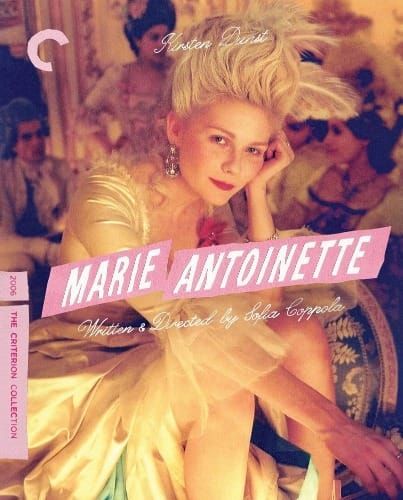
I was a day one Marie Antoinette stan. It is hard to remember now, since the film has become so beloved and influential, but it was not popular upon release. It was booed at screenings in France, and widely considered some kind of decadent frivolity, only of interest to girls who were too brainless to consider more serious films (read: boring) films about the French Revolution. Of course, I was one of those brainless girlies, and I bought every Marie Antoinette bio I could find, and absolutely devoured Caroline Weber's Queen of Fashion: What Marie Antoinette Wore to the Revolution. I would posit that the same girls who had an Anne Boleyn phase also had a Marie Antoinette phase. I say this because I am that girl.
Well, Marie Antoinette is now twenty, and the brainless girlies won because the film is now iconic, widely celebrated, and being feted across the world upon the occasion of its 20th anniversary. Kirsten Dunst (millennial queen) and Coppola are back at Versailles, which is hosting an exhibition about the making of the film. Everyone is sharing images from the absolutely BEAUTIFUL Vogue editorial on the film from the September 2006 edition.
What I want to talk about, though, is how influential it has been on the shape of history on the screen in the past twenty years. Without Marie Antoinette we wouldn't have Bridgerton. Or Dickinson. Or The Great. Or Our Flag Means Death. Or really any historical film or television series from the last twenty years.
Marie Antoinette wasn't the first film to use intentional anachronisms, such as its 80s soundtrack, or that famous shot of a pair of Converse in Marie's wardrobe, but it was certainly the most influential in terms of establishing a certain style of historical film and television. These days, almost every piece of historical content on the screen uses contemporary music on its soundtrack, even where the property is otherwise quite "straight" in its presentation of history. And, as I argued in my book, the film really was at the center of what I called the "anachronistic turn" in historical fiction. We are so used to this style now that it's no longer a novelty.
What Coppola did with the film is establish that the currency of the historical film lies in its representation of emotional authenticity. That means, basically, does this film feel true? The details that historians sometimes gets so worried about don't matter because what matters it that the film captures the "truth" of the emotional experience of being Marie Antoinette. That doesn't make the film any less "accurate"; it's just locating authenticity in a different place. Also, accuracy and authenticity are different things, but that's a discussion for another day. That's why Marie has a pair of Converse and there's New Order on the soundtrack. Because that's what Coppola bought and listened to as a girl. Because the film assumes that there is a transhistorical continuity in the experience of being a girl, and wants to make that legible to audiences. We can quibble over whether that's true or not, but that doesn't matter because it feels true, and makes history something that can be felt and related. That's interesting and valuable in itself.
What is also notable about the film is the way it sets up and then demolishes historical myths, in a way that we also see play out in most more recent historical properties. One of my favourite scenes is the scene in which Dunst, as Marie, sits in the bath and says "let them eat cake," only to be followed by a jump cut which Marie reveals that this is a fantasy and that "I would never say that". Alena Smith does a similar thing in the wonderful Dickinson; she sets up all these myths about Emily Dickinson and then deconstructs them, while at the same time demonstrating why those myths arose in the first place. It's all very meta and postmodernist and fun and absolutely catnip for me personally.
What works so beautifully about the film is its portrait of a girl thrust into this extremely strange world of power and privilege, and its connection with Coppola's so-called "girlhood trilogy," which includes The Virgin Suicides and Lost in Translation (although all Coppola films are about girlhood). Marie has come from power, sure, but the French court is something else entirely. Nowhere is that better encapsulated that the scene where Marie is dressed by her attendants for the first time, in an elaborate ceremony where seemingly hundreds of people vie for the chance to help, or at least watch, her dress. "This is ridiculous," Dunst says, in her American accent.* Marie Antoinette was a girl in a system that had no real room for her as a person, but in which she had to operate as a symbol, as all royalty does. What does a girl do when she's in that fundamentally weird, incredibly lonely role? She goes shopping.
I mean, what else would you do if you were taken away from your family (knowing that you would never see most of them again), deposited in a foreign country, stripped of your clothes and even your dog, married to a stranger, and expected to somehow navigate a complex court system? Oh, and also rule France. And have a baby, because the most important thing for a queen to do is pop out children, of course.
As others have noted, we could read Marie Antoinette in the film as an avatar for Sofia Coppola, another daughter of privilege who found herself surrounded by powerful people and unlimited wealth. Marie has to make a space for herself, just as Coppola did, although obviously Coppola was far more successful at this and still has her head etc.
What Marie Antoinette also does so well is toe the line between sympathy for Marie and her coterie of friends (Rose Byrne as Lamballe is a particular favourite of mine) and the real suffering of the French people that would result in the Revolution. The film knows that this luxury comes at the expense of the people, and is fundamentally empty; the King, after all, is an awkward nerd who would rather play with locks than do any real king-ing. These are children who have these positions of enormous privilege, and they have no real idea what to do with that power except have parties and wear amazing clothes. Don't get me wrong: I think all monarchies should be abolished, and that it is frankly embarrassing we still have kings and queens at all.
But the film also treats Marie with sympathy and tenderness. The historical reputation of Marie Antoinette has softened alongside this film; we no longer see her as the avatar of everything that was wrong with the ancien regime, and now see her as a scapegoat and a victim. However, the film also doesn't fall into the trap of recent historical fictions about girl queens of history and turn her into a girl boss. Coppola's Marie, like all her girl protagonists, is far too complex for that.
When we see Marie set herself up a more amenable life for herself at Trianon, we simultaneously know that these are rich people in country-maid cosplay, and that Marie is desperately trying to find a place for herself. Sometimes two things can be true at the same time!
One of the sticking points for critics is that Coppola ends the film before the Revolution really takes hold. We simply see Marie being driven away from Versailles, before imprisonment, before being separated from her children, before her husband's execution, and before, of course, her own. But, I would argue, those events have no place in the film. We don't have to see Marie humbled in that fashion. We don't want to see Rose Byrne's head on a stick held up outside Marie's prison. We don't have to see Marie approach the guillotine. We know that's coming. There are other films that you can watch if you absolutely must see that. What we want to see is Marie as a young woman, navigating life in a hostile system.
Also, we want to see the clothes. Because they are beautiful. And sometimes looking at beautiful things is its own reward.
So, happy 20th anniversary Marie Antoinette! I loved you from the start.
*The use of the American accent is, in itself, often considered an anachronism. Which it is, but no more of an anachronism than the usual practice of having actors in historical films speak in British accents, which we now read as "accurate" even when it is used in films that predate the existence of English as a language.
