Party like it's 1499: On Troye Sivan's Party
So of course I start off my newsletter with an article about a music video.
Anyway, my idea with this thing is to write little pieces about historical fiction or literature or pop culture or anything that strikes my fancy. I have a problem with overcommitting to longer journal articles or book chapters because I get excited about something so this seems a good way to get things out of my system without promising to do something that will cause me stress in a year.
That brings to me to Troye Sivan's new music video, "Party," which debuted...a few hours ago. I knew I was going to be interested when I saw the teaser, because the video has a medieval setting and aesthetic. As somebody who has written extensively about anachronism in historical fiction (this entire book that I wrote), an upbeat dance track set in a medieval court is manna from heaven. I have also always circled around medievalism for my entire career, although I would not say that I am a medievalist. I have written stuff about King Arthur fiction, and stuff on fiction about the Black Death and Joan of Arc, though.
The song's lyrics are simple, befitting the kind of throw-back EDM vibe of the song. It's simply about...partying. Partying everywhere. On the way to a party. On the way back from a party. On the street. In Troye's house. In the bush. The song also notably features an interpellation of Madonna's iconic 2000 single Music; a touchstone for the Elder Millennials or, really, anyone with taste. Like most of Madonna's oeuvre, Music is about music's capacity to bring people together, on the dance floor or otherwise (see also: Danceteria, the song of the Northern Hemisphere summer for people with taste).
That juxtaposition of a 2026 pop song (mixed with a 2000 pop song) set in a medievalist setting is exactly the kind of creative anachronism (by which I mean intentional anachronism) that has come to characterise twenty-first-century historical fiction, especially on the screen. The conjunction of unlikely elements makes us think about the connections between past and present: if you're going to make contemporary references (or use contemporary music) in a scene otherwise set in the past, then you're inevitably going to be jolted out of the sense that you're watching history and remember that you're watching something made now. The word "bathos" refers to a shift in modes from the serious to the silly, or from high culture to low culture, and the creative anachronism can often be deployed to do just that. The opening VERY SERIOUS monologue about conquest which begins Party is followed immediately by a dance pop beat and Troye singing about partying: a perfect encapsulation of bathos.
There is also something inherently funny about the use of anachronisms in historical fiction. It is funny to see Troye talking about partying while wearing medieval armour. His Australian accent made me smile. In the first scene of the video, when he appears walking through a battlefield in armour, he starts singing with his Australian accent, and the visual and aural juxtaposition of the high medieval setting and his Aussie strine is just funny.
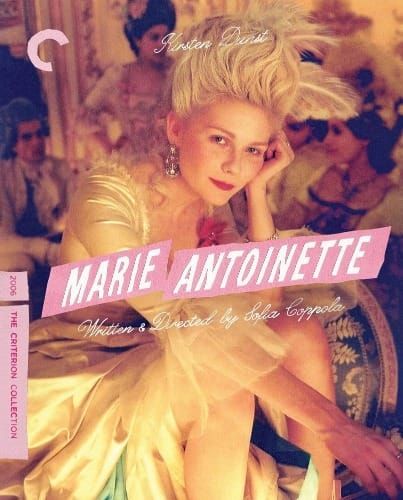
In my book I date the use of creative anachronism back to historical comedy (Blackadder, Monty Python, the films of Mel Brooks), but also some historical films that are roughly contemporaneous with Madonna's Music: Shakespeare in Love (1998) and A Knight's Tale (2001). The latter is particularly interesting because it includes a scene in which Chaucer and his friends dance to a David Bowie song that they can apparently hear; in other words, to diegetic music (music that forms part of the story) rather than just a song playing on the soundtrack. Of course, the text that people think about when they think about this kind of musical creative anachronism is Sofia Coppola's Marie Antoinette (2006), which used an 80s pop-punk soundtrack to tell a story about eighteenth-century France.
So why is Troye Sivan setting a song about partying in a medievalist setting? I'd argue that it's pretty clear: we live in an apocalyptic hellscape of violence and social decline, and what else is there to do but party? As the world goes to hell around him, Troye simply sings about partying and music. Later, he joins such a party, as the medieval court becomes an increasingly wild party in itself. There is, of course, a long tradition of music about partying and dancing in the face of the end times. It is no coincidence that the EDM boom coincided with the Global Financial Crisis, after all. In a world that seems to make increasingly less sense, then maybe all that we can do is let music "make the people come together," as Troye (via Madonna) suggests.
There's another potential reading here, as there always is. Those supposed to be in charge - and it appears that Troye is represented here as some kind of medieval king or prince - are simply partying and engaging in all kinds of hedonistic pleasures as the world burns. The first scene suggests that this society, such as it is, has just been victorious in conquest. We could read this video as a critique of the excesses of the ruling classes, partying it up while the rest of us outside the castle walls struggle with the drudgery of everyday life. Whether or not that's what Troye intends (and I would argue that the former reading is more likely, given his apparent investment in the idea of partying as a salve), it's certainly possible to see the video as a portrait of an out-of-touch elite partying while the world ends.
I'm predicting that the medieval is going to come back in a big way. It seems to have fallen out of favour since the end of Game of Thrones, but there's a new movie about the Peasants Revolt coming out soon (called The Uprising and starring internet boyfriend Andrew Garfield), and there's always some new Game of Thrones spinoff happening somewhere, although I haven't paid attention to that franchise in years. I think we are in a contemporary moment that is suited to being thought through via the medieval (although what moment isn't?)
In any event, it is a great music video and these are Troye's best visuals in my opinion.
Please subscribe if you like this post so that I remember to actually use this thing instead of just setting it up and then abandoning it for months. Also, please save me from writing yet more academic articles that I do not have time for by encouraging me to post more here!